


Education
How to Read Betting Odds: The Complete Guide for Beginners
Learn how to read decimal, American and fractional odds, convert between formats, calculate payouts and find answers to common betting odds FAQs.

Knowing how to read betting odds means you’ll never have to guess what a price really means. They show up in different formats depending on the bookmaker. Decimal odds are the standard on Australian and European sites. American odds run US sportsbooks. Fractional odds are common with UK bookmakers, especially on horse racing markets.
Each format is really just a different way of writing down the same two things: how likely an outcome is, and what you get paid if it wins.
This guide breaks down how to read betting odds, how to convert between them, and how to work out the implied probability behind any price.
How to Read Decimal Odds
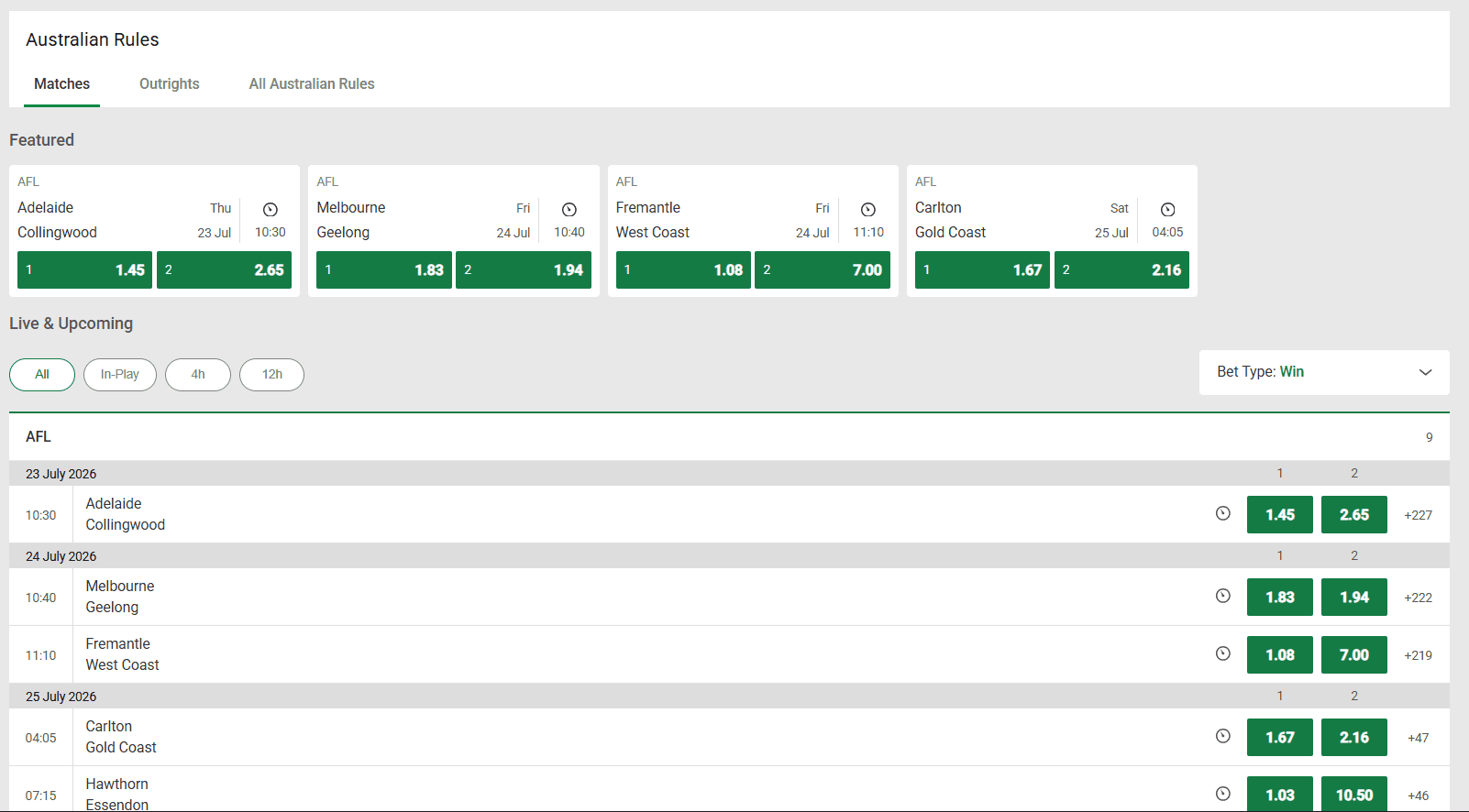
Also called European odds or continental odds, decimal odds are the standard format on most major Australian bookmakers. They’re also the betting format across Europe, Canada, and New Zealand, which makes them the most widely used odds format in the world and the easiest for beginners to understand.
Unlike other formats, decimal odds show your total return, not just your profit. That means your original stake is already included in the displayed number.
Formula
Every decimal odd tells you exactly how much you’ll receive for every $1 staked.
The formula is simple:
Stake × Decimal Odds = Total Return
Your profit is then:
Total Return - Stake = Profit
Let’s say, for example, you back a horse at 6.00 with a $15 stake.
Calculation: $15 × 6.00 = $90
You receive:
Total return = $90
Profit = $90-$15 = $75
Stake | Odds | Total Return | Profit |
|---|---|---|---|
$10 | 1.80 | $18 | $8 |
$20 | 2.50 | $50 | $30 |
$50 | 4.00 | $200 | $150 |
Because the stake is included, decimal odds are generally considered the simplest odds format for new bettors.
Reading Favourites and Underdogs
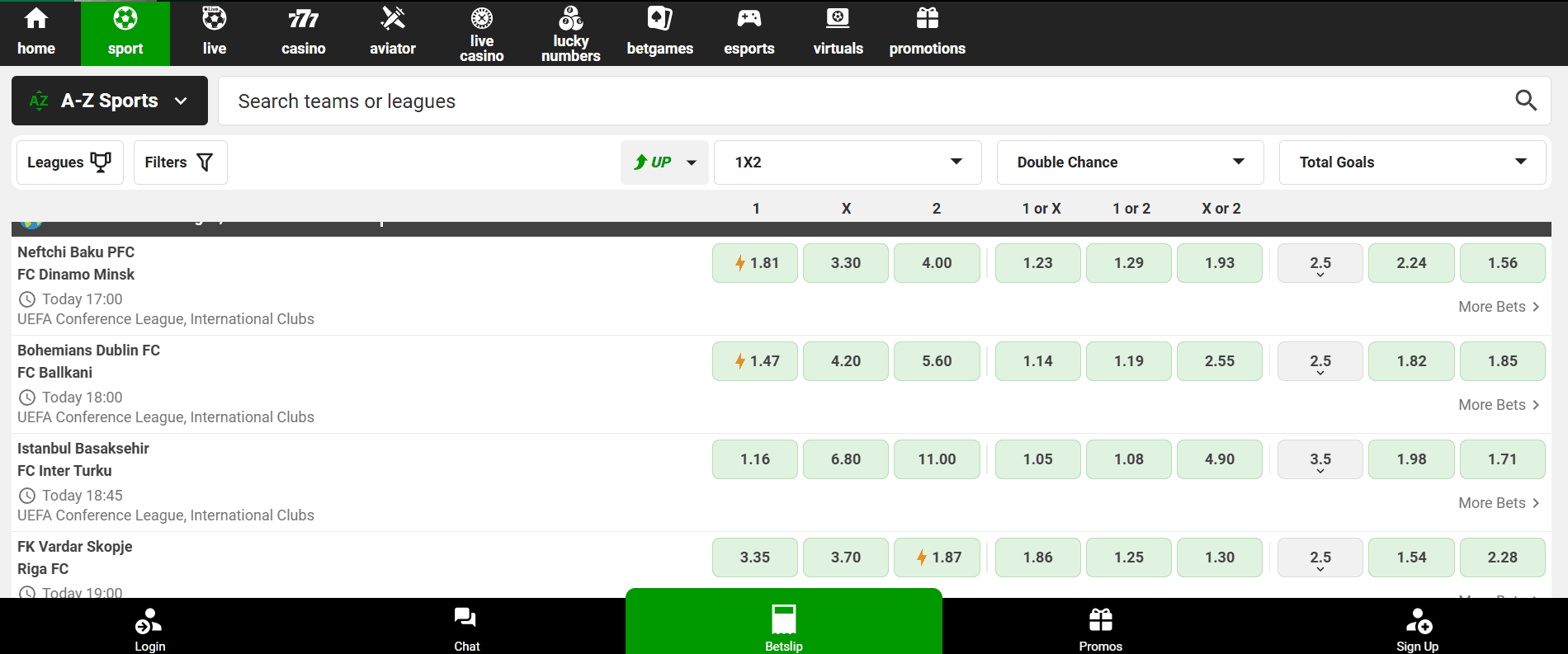
The lower the decimal odds, the more likely the bookmaker considers that outcome to be.
For example:
Team | Odds |
|---|---|
Brisbane Lions | 1.45 |
Sydney Swans | 2.75 |
Here:
Brisbane is the favourite.
Sydney is the underdog.
A Brisbane win pays less because it’s considered more likely.
A Sydney win pays more because it’s considered less likely.
As a general guide:
Odds | What They Usually Mean |
|---|---|
1.10-1.40 | Heavy favourite |
1.50-2.00 | Favourite |
2.00-3.50 | Competitive underdog |
4.00+ | Outsider |
10.00+ | Longshot |
These aren’t fixed rules, but they provide a quick way to gauge how bookmakers rate each selection.
Key Takeaways
The displayed odds already include your original stake.
$1.01 is about as short as odds get.
Comparing prices across bookmakers can help you maximise potential returns.
How to Read American Odds
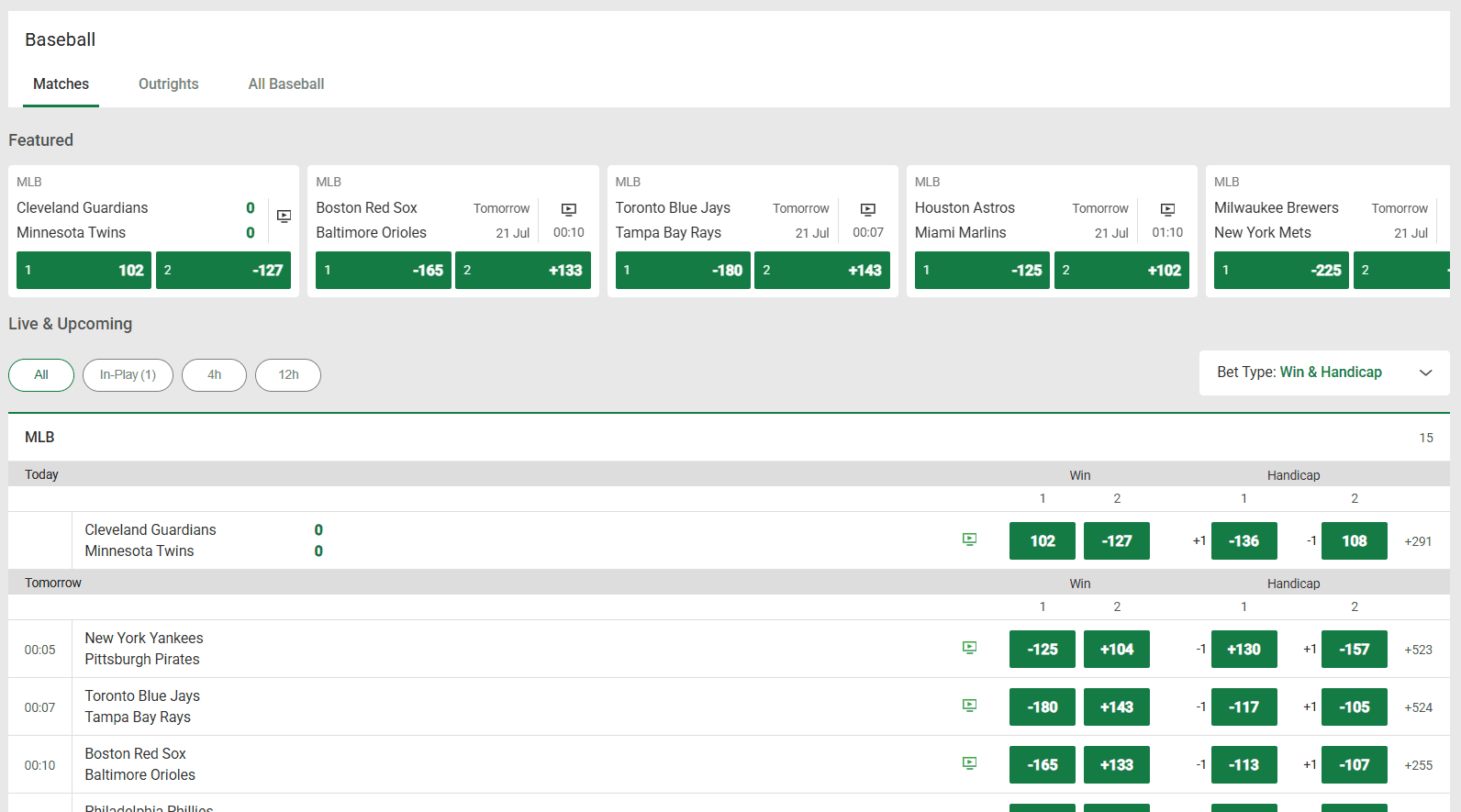
Also known as moneyline odds or US odds, American odds are the default format on every major US sportsbook. While they’re uncommon on Australian betting sites, you’ll frequently see them if you use international sportsbooks, read American sports coverage, or bet on leagues such as the NBA, NFL, MLB, NHL, or UFC.
Unlike decimal odds, American odds don’t show your total return. Instead, they tell you either:
How much profit you’d make from a $100 stake (positive odds), or
How much you need to stake to win a $100 profit (negative odds).
Negative Odds (-)
Negative odds represent the favourite. They tell you how much you must stake to win a $100 profit.
Formula: Profit = (100 ÷ Odds) × Stake
For example, the Lakers are priced at -150. A $150 bet profits $100 on a total return of $250. Scale it down and a $15 bet profits $10.
Positive Odds (+)
Positive odds represent the underdog. They show how much profit you’ll make if you stake $100.
Formula: Profit = (Odds ÷ 100) × Stake
For example, the Jaguars are priced at +220. A $100 bet profits $220, for a total return of $320. A $10 bet profits $22.
Here’s a simple way to interpret them.
Odds | Meaning |
|---|---|
+100 | Even money |
+150 | Slight underdog |
+250 | Clear underdog |
+500 | Longshot |
-110 | Very evenly matched market |
-140 | Moderate favourite |
-200 | Strong favourite |
-500 | Heavy favourite |
Reading Even Money Odds
One of the most common American odds you’ll see is +100, often called “even money” or “evens”. It simply means if you stake $100, you make $100 profit with a total return of $200
Key Takeaways
-110 is the most common number you’ll see, usually attached to spreads and totals. That’s the bookie’s standard margin, sometimes called the vig, and it means you need to stake $110 to profit $100.
The plus or minus sign immediately tells you whether a selection is favoured.
American odds are widely used across US sports betting and are easy to understand once you know the basics.
How to Read Fractional Odds
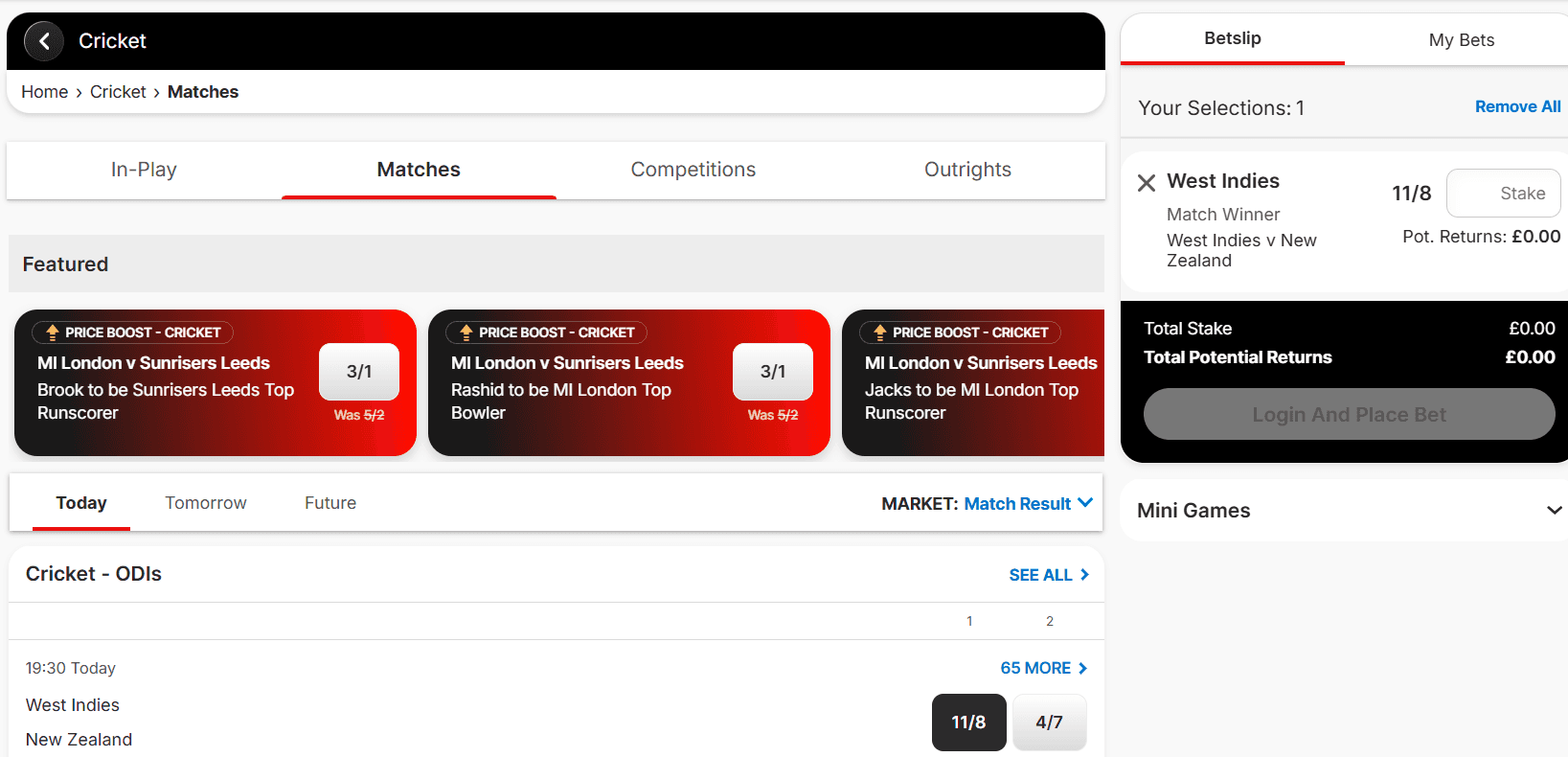
Fractional odds are the traditional betting format used in the United Kingdom and Ireland. They’re also called UK odds, British odds or simply fractions, and they’re especially common in horse racing, although you’ll also see them on football, tennis, golf and other sports with UK bookmakers.
Unlike decimal odds, fractional odds show your profit only. The fraction shows how much profit you win relative to your stake. Your original stake is not included in the displayed fraction, so you’ll need to add it back to calculate your total return.
Fractional odds are written as one number over another, such as:
1/2
5/4
6/1
10/1
The top numerator (top number) represents your profit, while the denominator (bottom number) represents your stake.
Formula
Profit = Stake × (Numerator ÷ Denominator)
Let’s say a horse is priced at 7/2. It means you’ll make $7 profit for every $2 staked.
If you bet $20 and win, your profit is 20 × (7 ÷ 2) = $70.
Add your $20 stake back, and your total return is $90.
Reading Common Fractional Odds
Fractional Odds | Meaning |
|---|---|
1/2 | Profit of $1 for every $2 staked |
4/5 | Profit of $4 for every $5 staked |
1/1 | Even money (equal profit and stake) |
6/4 | Profit of $6 for every $4 staked |
2/1 | Profit of $2 for every $1 staked |
5/1 | Profit of $5 for every $1 staked |
10/1 | Profit of $10 for every $1 staked |
Key Takeaways
Odds-against bets have a bigger numerator than denominator, like 7/2 or 10/1. That means the bookie rates the outcome unlikely, and profit exceeds stake.
Odds-on bets flip that around, like 1/4 or 2/5. You’re backing a strong favourite, and profit will be less than your stake.
Evens (1/1) sits right in the middle. Win, and you double your money.
How to Convert Betting Odds
Once you can read all three formats, converting between them is just arithmetic. The table below shows the same odds in all three formats, along with their implied probability.
Implied Probability | Decimal | American | Fractional |
|---|---|---|---|
66.67% | 1.50 | -200 | 1/2 |
55.56% | 1.80 | -125 | 4/5 |
50.00% | 2.00 | +100 | 1/1 |
44.44% | 2.25 | +125 | 5/4 |
40.00% | 2.50 | +150 | 3/2 |
33.33% | 3.00 | +200 | 2/1 |
You can use our free odds converter whenever you want to instantly calculate odds between decimal, American and fractional.
American Odds to Decimal Odds
Positive American Odds
Decimal Odds = (American Odds ÷ 100) + 1
Example:
American Odds of +150 = (150 ÷ 100) + 1 = 2.50
So, +150 = 2.50
Negative American Odds
Decimal Odds = (100 ÷ American Odds) + 1 (Ignore the minus sign when doing the calculation.)
Example
American Odds of -200 = (100 ÷ 200) + 1 = 1.50
So, -200 = 1.50
Decimal Odds to American Odds
Decimal Odds Above 2.00
American Odds = (Decimal Odds - 1) × 100
Example
Decimal Odds of 2.50 = (2.50 - 1) × 100 = +150
Decimal Odds Below 2.00
American Odds = -100 ÷ (Decimal Odds - 1)
Example
Decimal Odds of 1.50 = -100 ÷ (1.50 − 1) = -200
Fractional Odds to Decimal Odds
Decimal Odds = (Numerator {1st number} ÷ Denominator {2nd number}) + 1
Example
Fractional Odds of 3/2 = (3 ÷ 2) + 1 = 2.50
Decimal Odds to Fractional Odds
Subtract 1 from the decimal, then write the result as a fraction and simplify.
Example
Decimal Odds of 2.50 = 2.50 - 1 = 1.50, written as 3/2
American Odds to Fractional Odds
Positive: Fractional = American ÷ 100, simplified
Negative: Fractional = 100 ÷ American, simplified (ignore the minus sign)
Example
American: +150 = 150 ÷ 100 = 3/2
Fractional Odds to American Odds
If the numerator is bigger than the denominator (odds against): (Numerator ÷ Denominator) × 100
If the denominator is bigger (odds on): -(Denominator ÷ Numerator) × 100
Example
Fractional: 5/1 = (5 ÷ 1) × 100 = +500
Converting Australian Odds to Percentages
Decimal odds offered on Australian betting sites can be flipped into a percentage, and once you get used to doing it, sizing up a market takes seconds. Here’s a quick look at the formula:
Formula: (1 ÷ Decimal Odds) × 100 = Implied Probability
Here’s how that plays out using the same prices from the table above:
1.50: (1 ÷ 1.50) × 100 = 66.67%
2.00: (1 ÷ 2.00) × 100 = 50.00%
6.00: (1 ÷ 6.00) × 100 = 16.67%
The percentage you get is the implied probability, which is the chance of an outcome added to the odds, shown as a percentage. It’s the bookie’s implied chance of that outcome happening, not the true chance. You can easily find the implied probability using an implied probability calculator, instead of doing it manually every time. In a perfect world, the implied probabilities of all outcomes in a market should sum up to 100%.
Understanding Bookie Margin and How to Get True Probabilities
When you add up the implied probabilities of every outcome in a real-world market, you’ll almost never get exactly 100%. It usually adds up to something like 103% or 108%. That extra bit above 100% is the bookmaker’s margin, also known as the overround, the vig, or the juice. It’s added into every odd on the board, and it’s how bookies turn a profit no matter who wins.
Here’s a simple head-to-head example. Say a match shows 1.80 for one team and 2.10 for the other.
1.80: (1 ÷ 1.80) × 100 = 55.56%
2.10: (1 ÷ 2.10) × 100 = 47.62%
Total: 103.18%
That extra 3.18% is the bookmaker’s margin. To remove it and find the true, fair probability behind each price, divide each implied probability by the total, then multiply by 100.
Team A true probability: (55.56 ÷ 103.18) × 100 = 53.86%
Team B true probability: (47.62 ÷ 103.18) × 100 = 46.15%
After adding them, you get 100%, which is what the market should show once the bookie’s cut is removed.
Doing this by hand for every market gets tiring fast, especially once you’re comparing several games across multiple bookies. Betsniper’s Fair Odds Calculator handles the maths for you, stripping the margin out of any price so you can see the true probability behind the odds.
You can also check out our full guide to better understanding what is the bookie margin and how to calculate fair price.
FAQ
How do betting odds work in Australia?
Aussie bookies use decimal odds almost exclusively. Multiply your stake by the odds for your total return if your bet wins, stake included.
What are the different types of bets?
Common types include head-to-head, line betting, totals (over/under), same game multis, futures, and each-way bets. Each carries its own odds and risk level, so match the bet to your read on the market.
What is implied probability in sports betting?
Implied probability turns odds into a percentage chance of an outcome, according to the bookmaker. It helps punters assess whether the available odds offer betting value.
What is a break-even percentage?
The break-even percentage is the minimum win rate you need at a given price to avoid losing money over the long run. It’s calculated from the odds and shows how often your selections must win to break even.
When and why do odds change?
Odds change as bookmakers react to betting activity, team news breaks, injuries, or weather conditions. Bookmakers adjust prices to balance their book and manage risk right up until markets close.
Bottom Line: Finding the Best Odds
Learning how to read betting odds is only half the job. Consistently comparing odds across multiple bookmakers can help maximise your potential returns, which is where betting tools like Betsniper’s Odds Screen come in. Use it to save both time and money while you find your next win.




Learn how to become a profitable punter with our guide
We have put 20+ years of betting knowledge into one guide to help you become a better punter as well as share why each Betsniper tool exists, how to use it and the best strategies you can implement today with the Betsiper tools!

Co-founder
I've been betting seriously for over a decade, ever since I realised you can actually make money from sports betting. I studied Economics and Finance at the University of Melbourne and funded my entire time there through betting. Over the years I've become obsessed with building tools and taking a mathematical, strategic approach to the markets. I've poured that experience into building Betsniper - the ultimate companion tool for the smart punter. I now spend my time educating others on how to think about betting strategically, discovering new strategies and ultimately making as much money as possible from sports betting.


Get access to cutting-edge technology as well as a helpful community to help you start making smart decisions when you are betting.


