


Education
Understanding Each Way Bet: Definition, Examples, and Payout Guide
Learn how each way bets work with examples. This guide covers win and place stakes, odds, payouts, and practical betting tips on how to place the bets.

One way to improve your chances of getting a return is to split your stake by placing an each way bet. This post covers everything you need to know about this special type of bet. Let’s find out how top punters get two shots at a return from a single selection.
What Is an Each Way Bet?
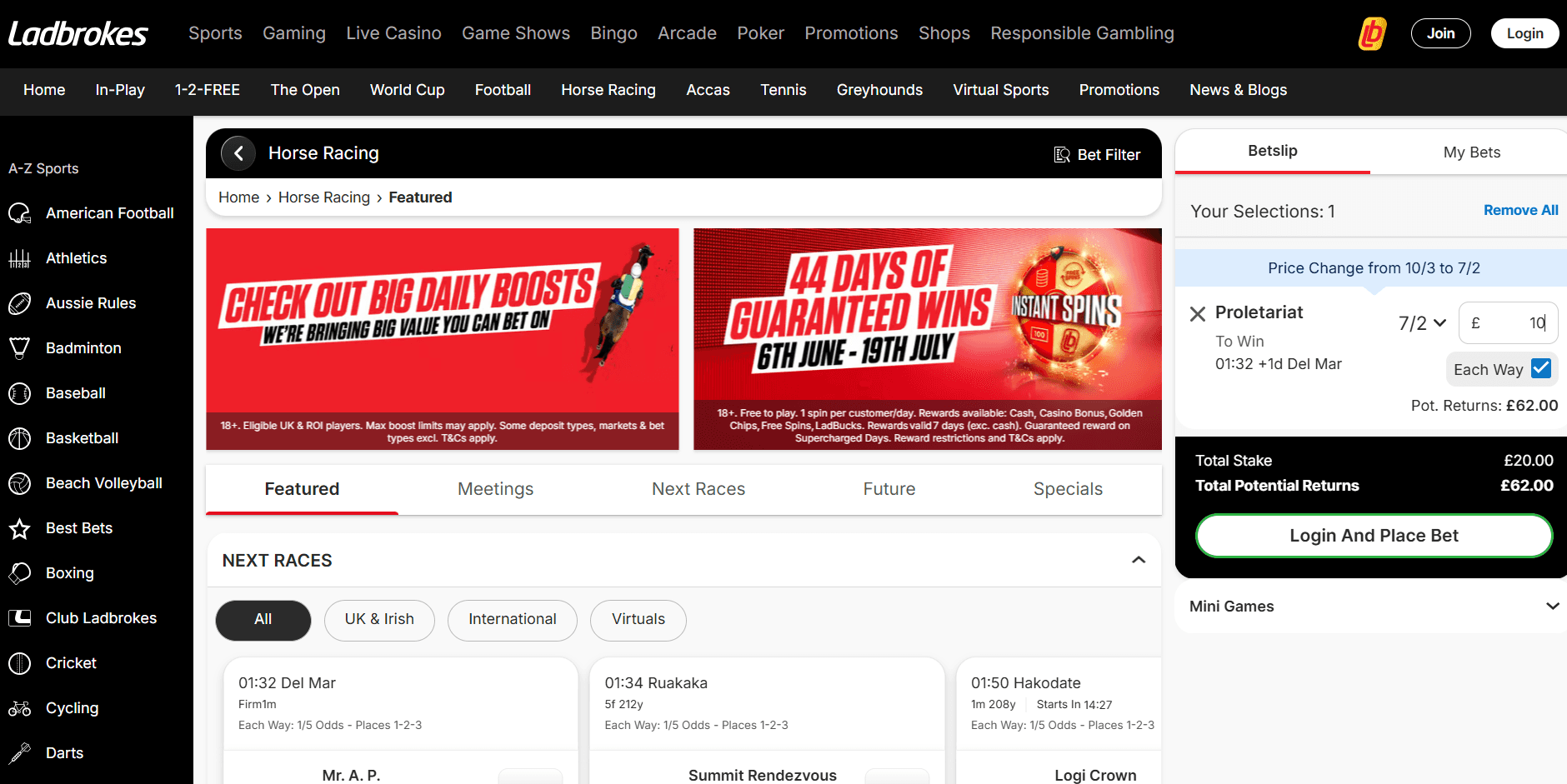
An each-way bet is a wager that splits your stake between a win bet and a place bet. The win part pays only if your selection wins outright. The place part pays if your selection lands any of the advertised place positions, which includes winning. That way, you can get a payout even if your selection doesn't win.
Say you put $10 each way on a horse at 9.00 in a field of eight.
$10 on your selection to win
$10 on your selection to place
Your total stake is $20. If your selection wins, both bets pay out. If it finishes in a paying position but doesn't win, the win bet loses, and the place bet pays out at the bookmaker's place terms. If it finishes outside the paying positions, both bets lose.
Here are a few sports where each way betting usually shows up.
Horse racing
Greyhound racing
Harness racing
Golf tournaments
Motorsport
How Each Way Betting Works
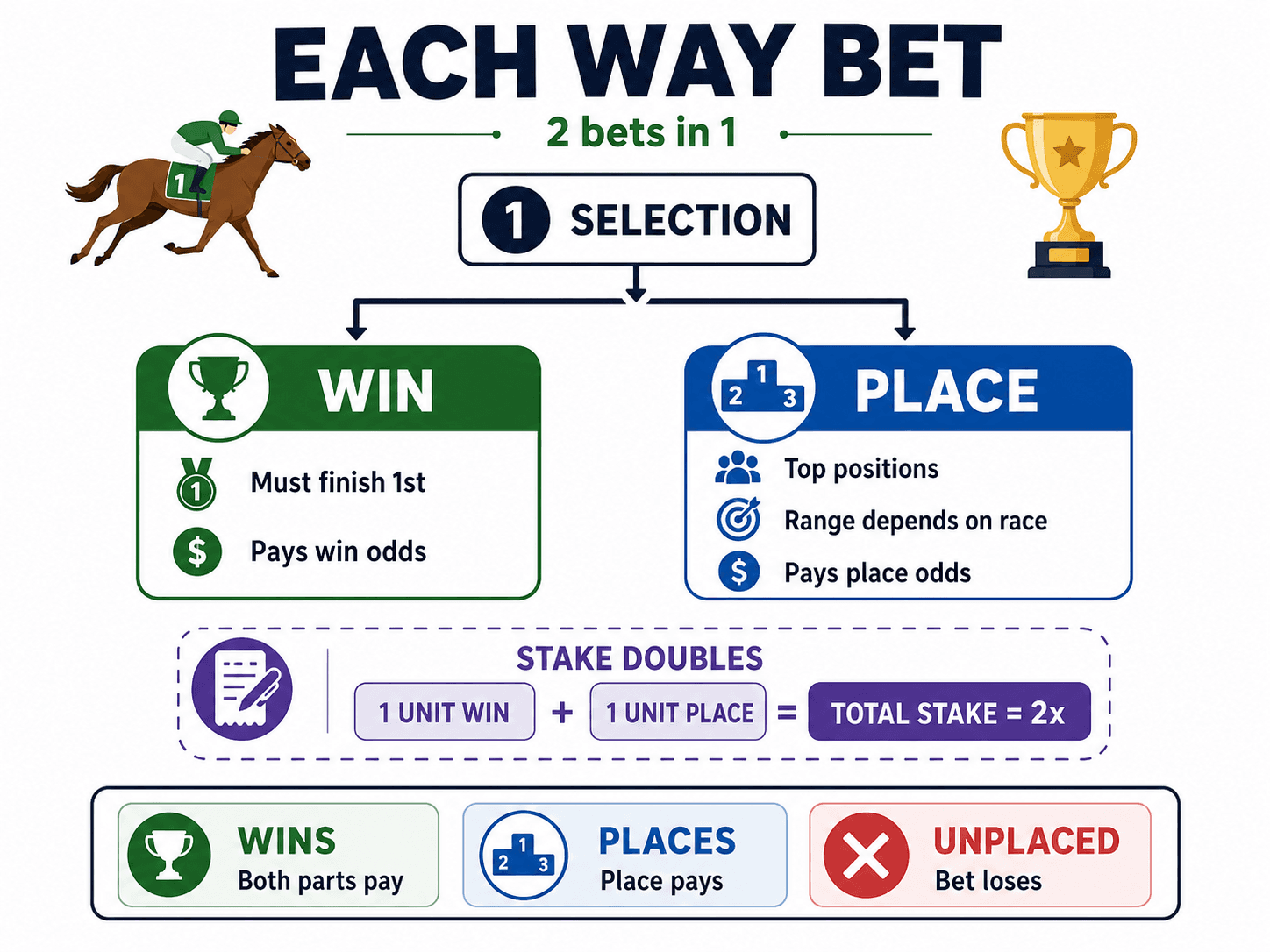
An each way bet is two separate wagers rolled into one. It doubles your stake and backs your selection to either win outright or end up within a specific range of top positions.
To help you understand all of the moving parts, we’ll break down the odds on offer, how your stake is split, and how the payout is calculated once the result is known.
Odds
Every each way selection carries two separate prices: a win price and a place price. You can find them on the racing card before you add a selection to your bet slip or on the bet slip itself once you've added it. Horse racing odds can be shown as decimal or fractional odds depending on the bookie.
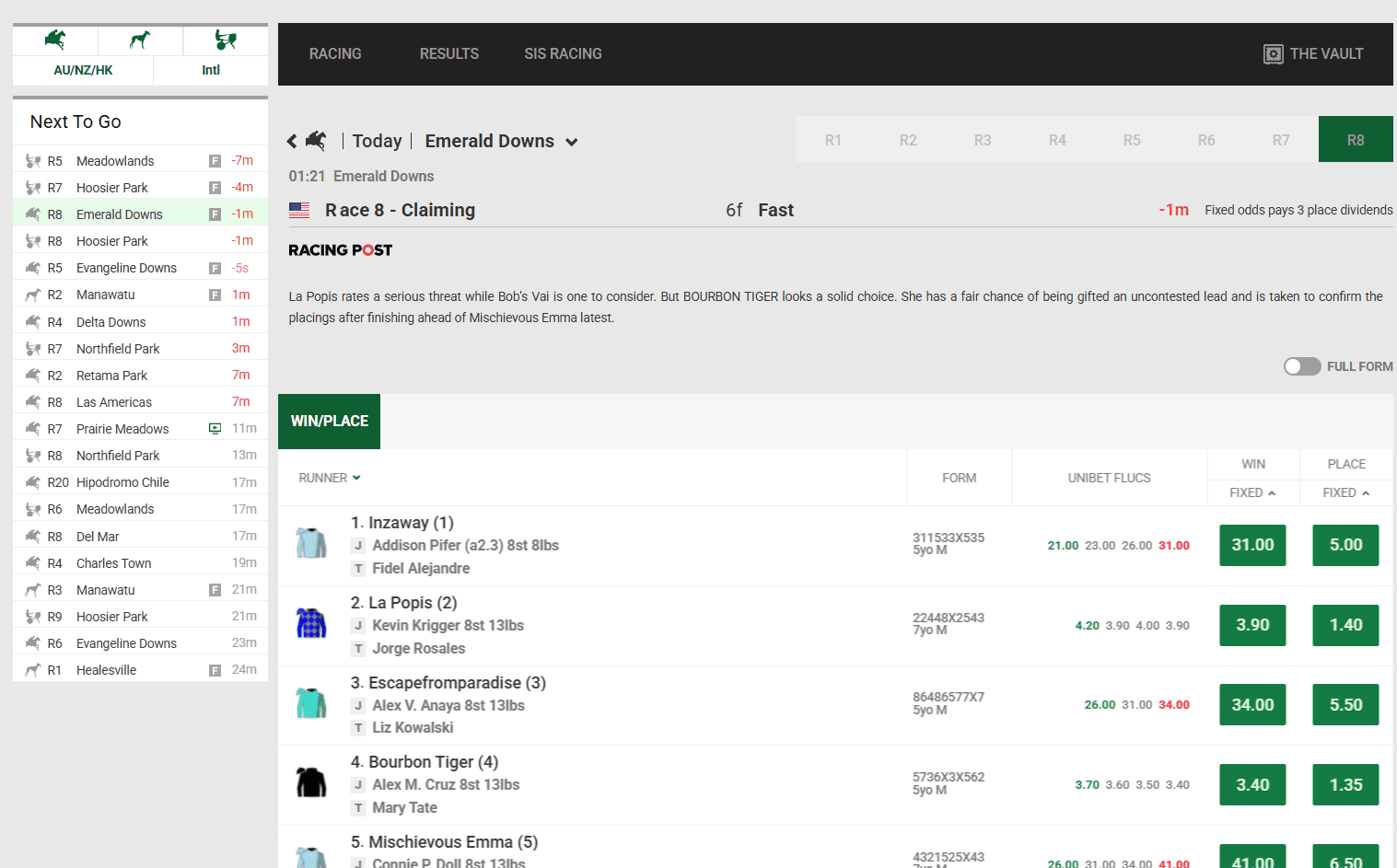
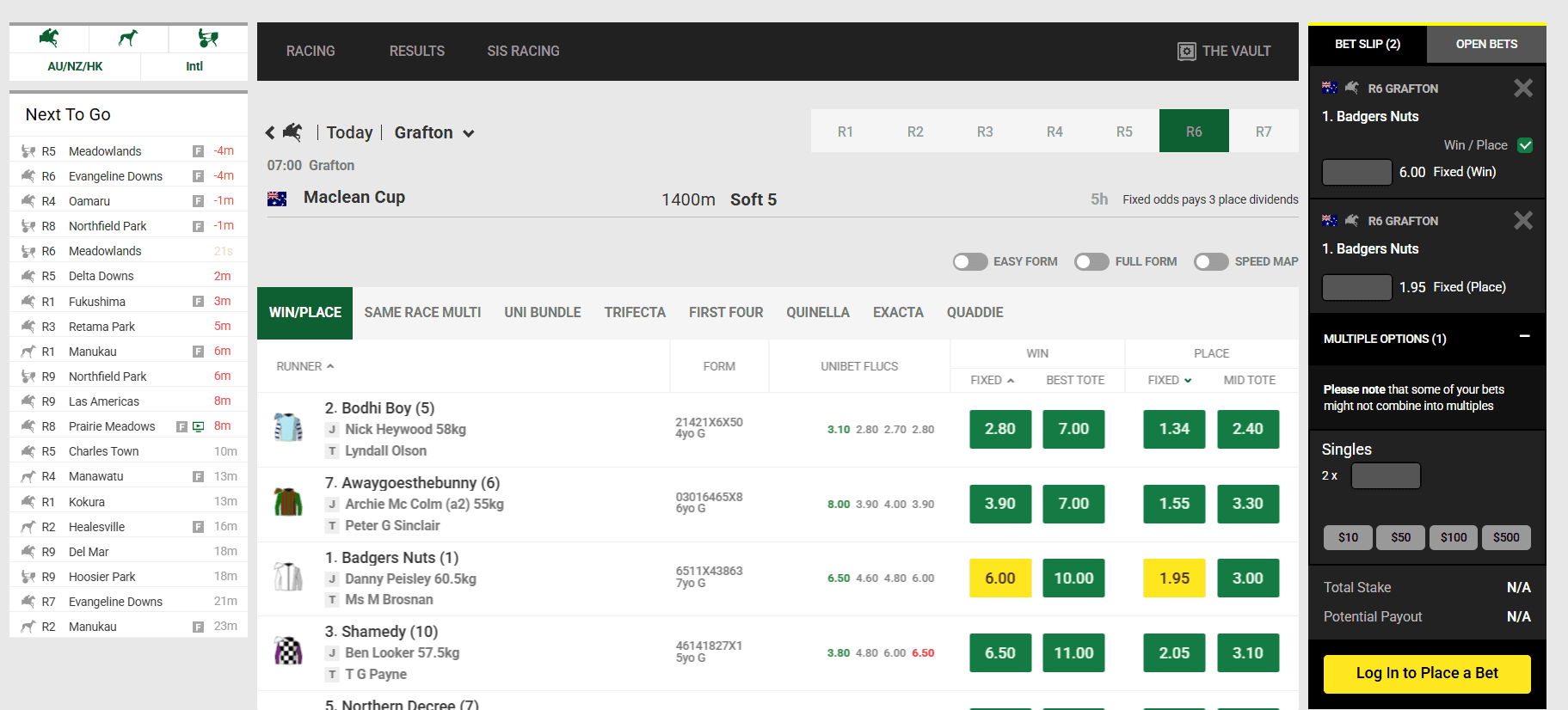
Some bookmakers clearly label them as "Win" and "Place" and write both as decimal odds, for example, 6.00 to win and 1.95 to place. The number of places paid for that race appears once, near the top of the page, something like "Fixed odds pays 3 place dividends."
Others show a single price per runner, with the each way terms, the fraction and the number of places paid stated once above the whole field (for example, "E/W 1/5, 3 Places"). Selecting the Each Way option on the bet slip applies that fraction to work out your place return.
Bookmakers set the place price as a fraction of the win price. In markets like Australian horse racing, that fraction depends on field size:
8 or more runners: pays 3 places, at 1/4 of the win price
5, 6 or 7 runners: pays 2 places, at 1/3 of the win price
Fewer than 5 runners: win only; no each way market offered
Outright markets like golf and footy premiership futures don't follow the field size rule. Instead, the bookmaker sets a fixed number of places and a fixed fraction for that specific market.

Australian horse racing page with each way win and place odds
Staking
Your each way stake is split evenly between the win and place bets. A $10 each way bet means $10 on the win and $10 on the place, for a total outlay of $20. Most Australian bookmakers work this way by default, though a few let you enter a total stake instead and split it for you.
Payouts
Here's how three each-way bets settle in practice: each with a $10 stake on both the win and the place, for a total of $20.
Scenario 1: the selection wins. A golfer priced at 26.00 to win and 6.50 to place goes on to win the tournament outright.
Both bets pay out: $260 from the win bet, plus $65 from the place bet, for a total return of $325 on a $20 outlay.
Scenario 2: the selection places but doesn't win. A team priced at 15.00 to win and 4.00 to make the top four finishes third. The win bet loses. The place bet pays $40. Total return is $40, which is a $20 profit on a $20 stake.
Scenario 3: the selection finishes outside the places. A horse priced at 9.00 to win and 2.50 to place, in a field of eight, finishes fifth. Both bets lose. You lose the full $20 stake.
Advantages of Each Way Bet
Here’s how these bets benefit you.
Higher Chance of a Return
The biggest advantage of an each way bet is that your selection doesn't necessarily have to win for you to make a profit. If your horse, golfer, or outright selection finishes within the bookmaker's paying positions, your place bet still returns money.
This makes each way betting particularly attractive in competitive events where picking the outright winner is difficult.
Reduces the Risk on Longer Odds
Backing an outsider outright is high risk, since anything less than first place returns nothing. An each way bet still pays out if that runner performs well without winning, thereby softening the blow when longer shots don't quite get there.
Works Across Most Markets
The same structure applies to horse racing, golf, football outrights and more, so it's one concept punters can reuse across sports.
When to Place Each Way Bets: Best Opportunities for Wins
Each way betting works best in larger fields, where more paid places mean a better chance the place bet lands. An 8-plus runner horse race or a golf tournament with a big leaderboard both offer more realistic place opportunities than a 4-runner race or a 2-way market.
It also suits value selections, not short-priced favourites. A heavily backed favourite often has a place price only marginally higher than 1.00, since the market expects it to place easily. The upside on the place side barely covers the extra stake. A mid-priced or longer-odds selection with a high winning chance offers a much better trade-off between the two halves of the bet.
Watch for enhanced place terms too. Bookmakers regularly extend the number of paid places or boost the place fraction for major events like spring carnival racing or big golf majors. Betting each way when these promotions are active gives you a better return for the same risk.
How to Place Each Way Bets
The exact layout varies between bookmakers, but the overall process for placing each way bets on most major Australian platforms usually follows the same basic steps.
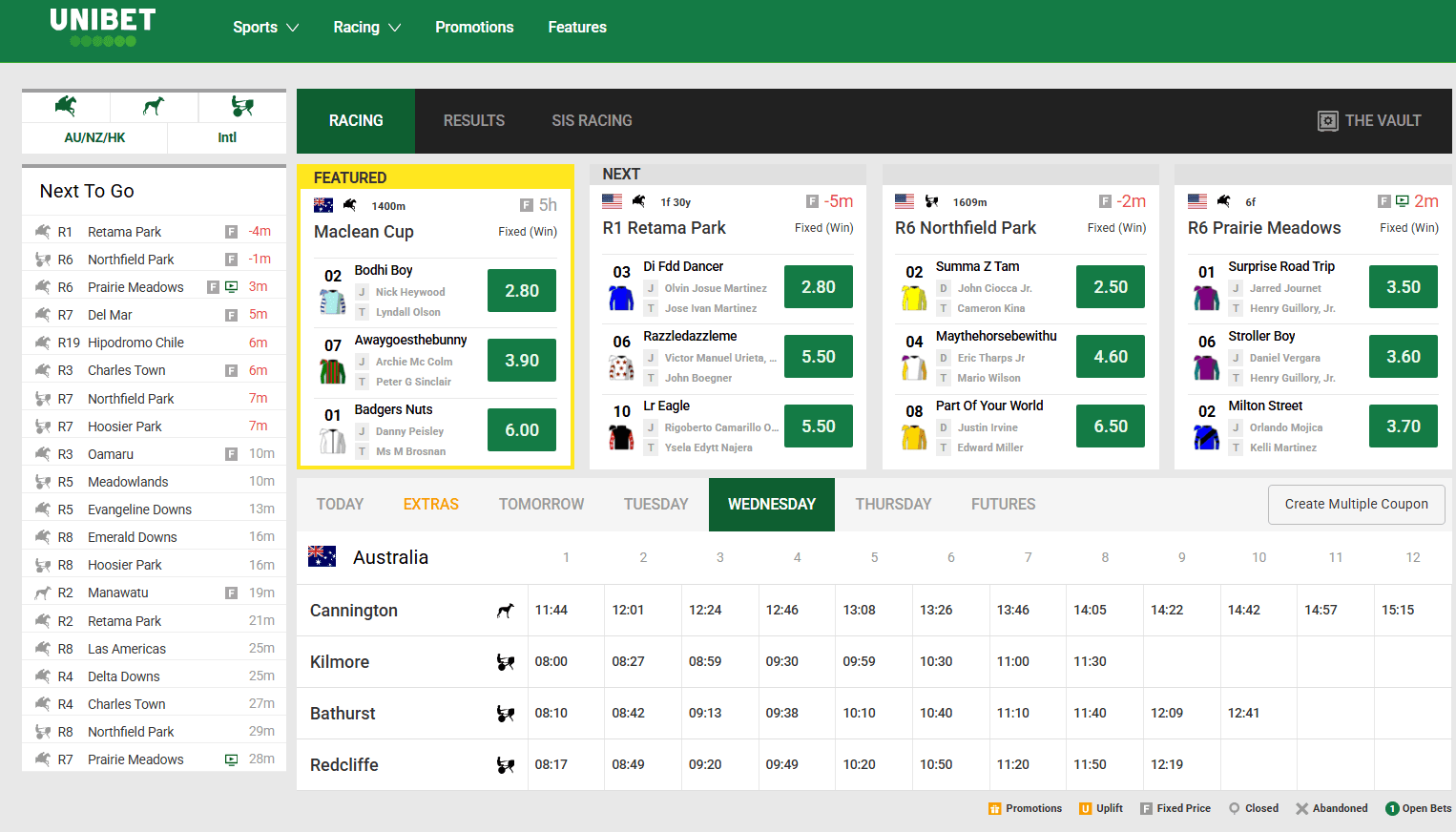
Step 1: Find Your Race or Event
Open your bookmaker's app or website and select the specific race or event that offers each way betting.
Step 2: Select Your Runner
Browse the available selections and click on the runner you want to back. This will add the selection to your betting slip.
Step 3: Select Win/Place or Each Way
Open your betting slip. Look for a Win/Place or Each Way toggle on the bet slip. Most Australian bookmakers provide options such as:
Win
Place
Each Way
Choose Each Way. The betting slip will automatically calculate your total stake based on the amount you enter.
Step 4: Enter Your Stake
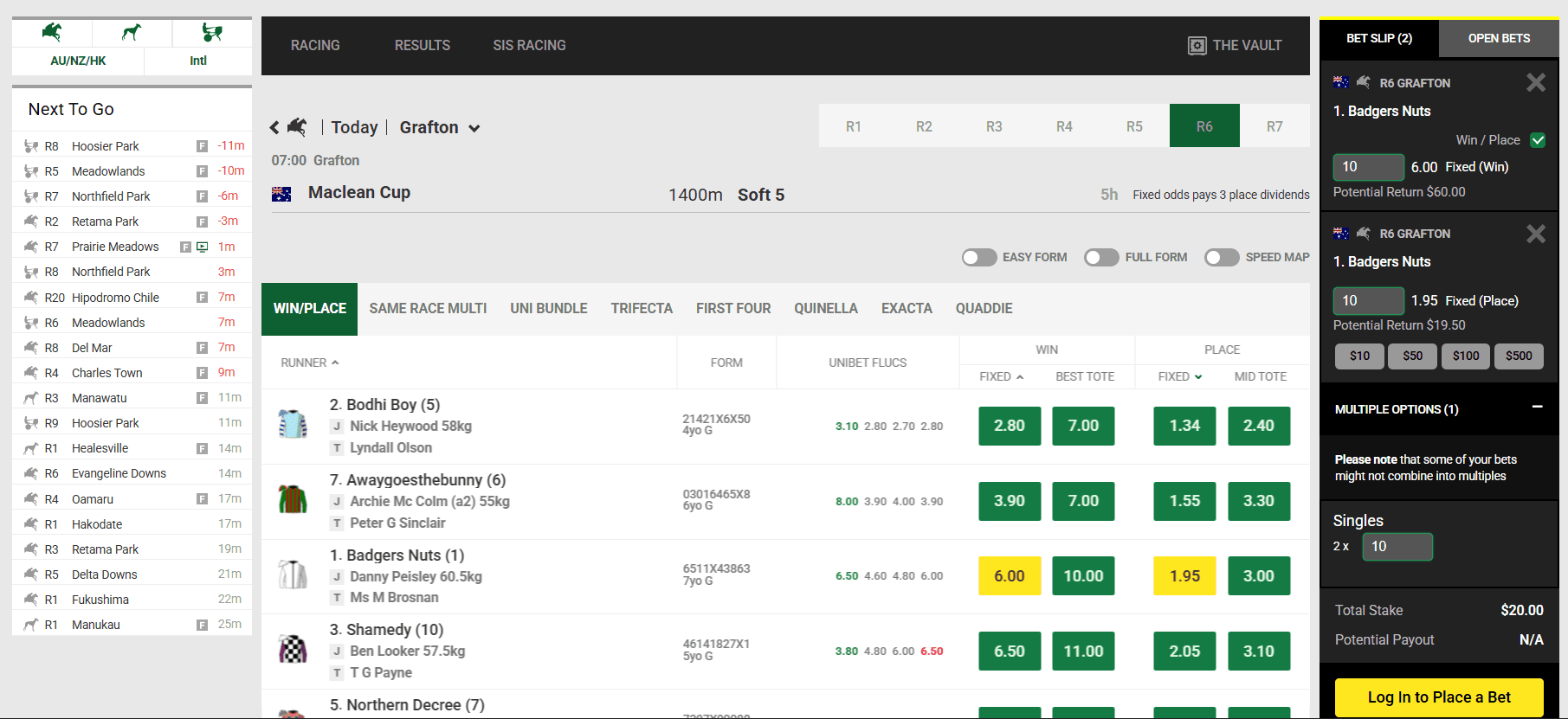
Once you've selected your runner, enter your stake. Most platforms will show the total combined stake before you confirm, so double-check it matches what you expect.
Remember, entering $10 Each Way means:
$10 Win
$10 Place
Total cost is $20 in this case. The betting slip should display your total outlay before confirming the wager.
Step 5: Review and Confirm
Check the runner, the odds, the number of places being paid, and the total stake one more time before you submit. Typically, bets can't be cancelled, so this is the step to catch any mistakes.
Once you're satisfied, confirm the bet.
Punter's Guide: Each Way Betting Tips
While there’s no single betting strategy that guarantees success, following a disciplined approach can help you make better betting decisions.
Compare Place Terms Before You Bet
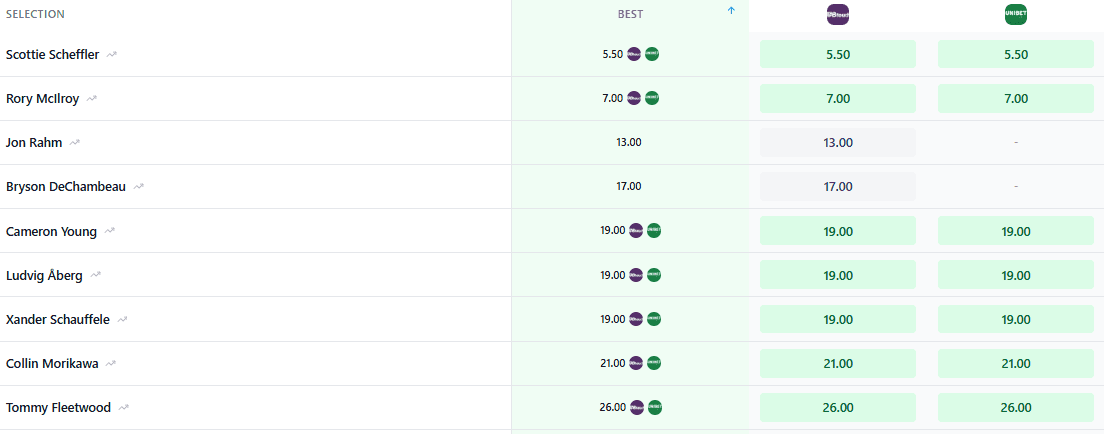
Place terms and win odds both vary between bookmakers, sometimes by a lot, even on the same race or market. A small improvement in odds can make a noticeable difference to your returns over time. Betsniper's Odds Screen shows win and place prices side by side across major Australian bookmakers, so you can see which one is actually offering the best combined return before you bet.
Check Whether the Place Odds Are Actually Value
Run the win and place prices through Betsniper's Fair Odds Calculator to strip out the bookmaker's margin so you can see whether the place odds you're being offered stack up in your favour.
Target Bigger Fields for Better Place Value
As a rule of thumb, the more runners in the race, the more places get paid and the more each way value tends to be on offer. Look for markets with generous place terms and avoid loading each way stakes onto short-priced favourites, where the place side adds little to your potential return.
Calculate Potential Returns Before Betting
Many punters focus only on the advertised odds without calculating what they'll actually receive if their selection places. Before placing an each way bet, use a betting calculator to find the win rate, place return, total potential return and net profit.
Don't Bet Each Way on Every Selection
Each way betting isn't automatically the smarter play. For short-priced favourites, a win-only bet may offer better value because the place payout is often relatively small. Likewise, for outsiders with little chance of finishing in the placings, an each way bet simply doubles your stake without significantly improving your chances of making a profit.
FAQs
What is an each way accumulator?
An each way accumulator combines multiple selections into two linked bets, a win accumulator and a place accumulator. Every leg needs to win for the win side to pay, and every leg needs to at least place for the place side to pay. Your stake doubles compared to a standard accumulator, since you're funding both legs.
What is an each way multiple?
An each way multiple is the broader term for any multi-leg each way bet, covering doubles, trebles, and accumulators. Each selection is judged on whether it wins or places, and the win and place portions settle independently of each other across every leg in the bet.
What does $10 each way mean?
A $10 each way bet means $10 goes on the win and $10 on the place, for a total stake of $20. If your selection wins, both parts pay out. If it only places, you collect the place return and lose the $10 win stake.
What happens to my each way bet in a dead heat?
A dead heat occurs when two or more runners finish in the same position. If the dead heat involves a paying place, the payout gets divided. Most Australian bookmakers divide the stake by the number of runners involved in the dead heat, then apply the full odds to the reduced stake for the affected part of the bet.
What are common reasons for void bets?
The most common reason each way bets get voided is a non-runner, when your selection pulls out before the event starts. Postponed or abandoned events, and markets where the field drops below the minimum runners for place betting, also commonly void a bet. Voided bets return your original stake in full.
Bottom Line
Each way betting is a smart option for punters who want to balance potential returns with a little extra protection. Before placing your next bet, visit Betsniper to compare odds, explore betting tools, and make more informed wagering decisions.




Learn how to become a profitable punter with our guide
We have put 20+ years of betting knowledge into one guide to help you become a better punter as well as share why each Betsniper tool exists, how to use it and the best strategies you can implement today with the Betsiper tools!

Co-founder
I've been betting seriously for over a decade, ever since I realised you can actually make money from sports betting. I studied Economics and Finance at the University of Melbourne and funded my entire time there through betting. Over the years I've become obsessed with building tools and taking a mathematical, strategic approach to the markets. I've poured that experience into building Betsniper - the ultimate companion tool for the smart punter. I now spend my time educating others on how to think about betting strategically, discovering new strategies and ultimately making as much money as possible from sports betting.



Get access to cutting-edge technology as well as a helpful community to help you start making smart decisions when you are betting.


